A Historic Moment for Faith and Reconciliation in Central Africa
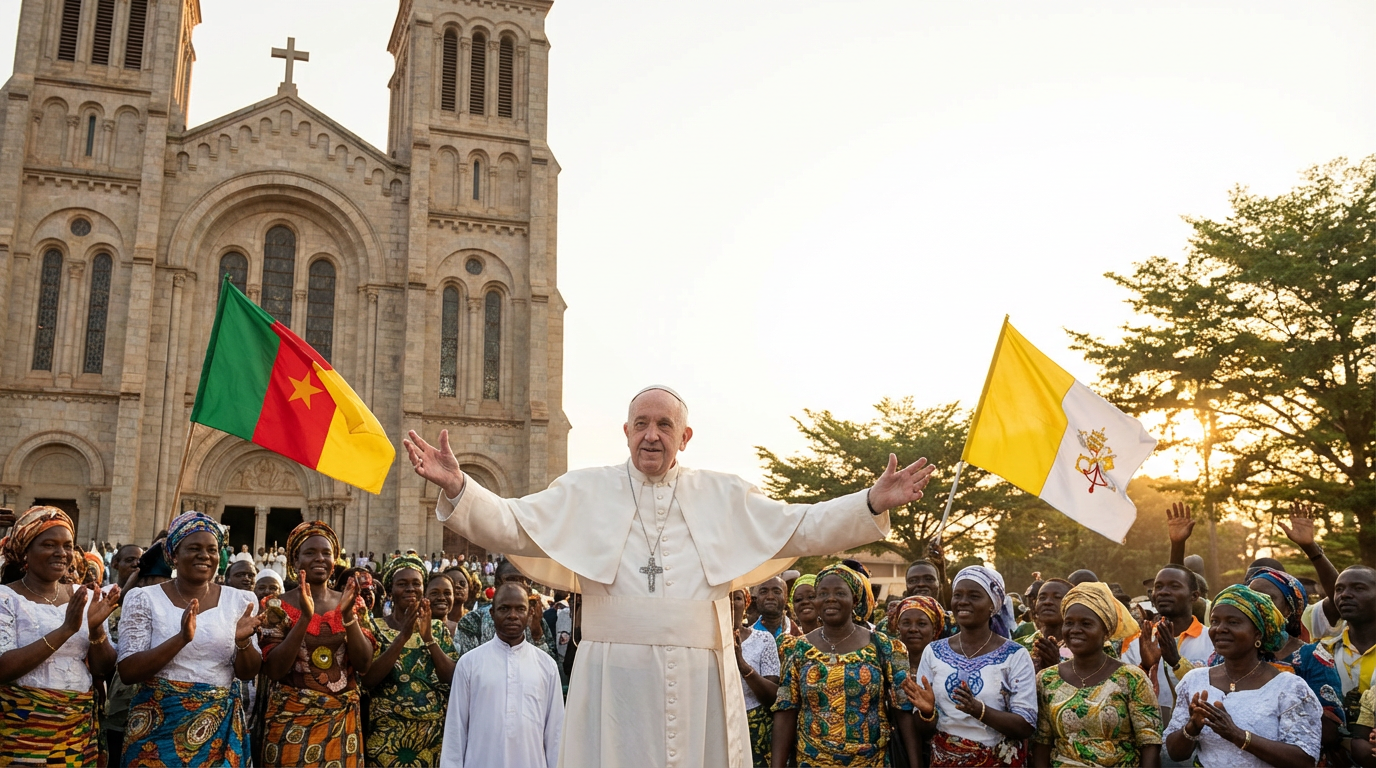
From April 15 to 18, 2026, Pope Leo XIV will make his first Apostolic Visit to Cameroon as part of a broader 10-day journey across four African nations. This pastoral visit represents far more than a ceremonial occasion. It embodies a purposeful mission to strengthen peace, foster unity, and empower a young, vibrant Catholic Church that is actively transforming society through education, healthcare, and reconciliation efforts.
The Apostolic Visit to Cameroon comes at a critical moment for this diverse Central African nation. With its bilingual population spanning Anglophone and Francophone regions, its striking geographical diversity from coastal areas to the Sahel, and its complex social challenges including separatist tensions and regional conflicts, Cameroon exemplifies both the struggles and the extraordinary resilience of faith communities across Africa.
For the millions of Cameroonian Catholics eagerly awaiting the Holy Father’s arrival, this visit offers renewed hope and validates their deep commitment to living the Gospel in challenging circumstances. The Apostolic Visit recognizes Africa not as a periphery of global Christianity, but as a vital, flourishing center of faith with profound lessons for the universal Church.
Understanding the Significance of the Apostolic Visit
The Strategic Importance of Cameroon in African Christianity
Cameroon stands as a microcosm of Africa’s religious vitality and diversity. The Catholic Church in Cameroon operates an extensive network of institutions that touch nearly every aspect of national life. More than 300 religious congregations work actively in pastoral care, education, healthcare, and social outreach across the country.
The Apostolic Visit acknowledges the Church’s indispensable role in Cameroon’s development. Catholic institutions run high-quality schools throughout the nation, often in remote areas where other educational options are limited or nonexistent. Catholic hospitals and clinics serve populations that would otherwise lack access to healthcare, particularly in underprivileged and rural communities.
This infrastructure of compassion and service makes the Catholic Church a cornerstone of Cameroonian society. The Apostolic Visit celebrates this contribution while encouraging continued engagement with the nation’s most pressing challenges.
A Legacy of Papal Visits and Spiritual Impact
Cameroon is no stranger to papal visits. Saint John Paul II visited in 1985 and 1995, with the latter visit marked by the signing of the apostolic exhortation Ecclesia in Africa in Yaoundé. Pope Benedict XVI also visited in 2009. Each Apostolic Visit occurred during moments of national difficulty and left lasting spiritual impressions on the Cameroonian faithful.
Pope Leo XIV’s Apostolic Visit continues this tradition, arriving at a time when the nation grapples with security challenges in its Anglophone regions and northern territories, while also managing the presence of approximately one million refugees from neighboring countries.
The Four-Day Apostolic Journey: A Schedule of Purpose and Encounter
Day One: Arrival in Yaoundé and Presidential Welcome (April 15)
Pope Leo XIV will arrive at Yaoundé Nsimalen International Airport on April 15, where he will receive an official welcome ceremony. Following the airport reception, the Apostolic Visit includes a meeting with President Paul Biya, where the Holy Father will address government authorities, civil society leaders, and members of the diplomatic corps.
This initial encounter sets the tone for the Apostolic Visit, emphasizing the longstanding bilateral and spiritual relations between Cameroon and the Holy See, formally established in 1966. Government spokesperson René Emmanuel Sadi has assured the nation that all preparations are complete, stating that “all necessary arrangements have been made under the esteemed auspices of President Paul Biya to provide an exceptional welcome to His Holiness Pope Leo XIV.”
The first day also includes a deeply meaningful visit to the Ngul Zamba Orphanage, demonstrating the Apostolic Visit’s focus on the most vulnerable members of society. The Holy Father will then meet privately with members of the National Episcopal Conference of Cameroon to discuss pastoral strategies and challenges facing the Church.
Day Two: The Peace Mission to Bamenda (April 16)
Perhaps the most symbolically significant moment of the Apostolic Visit occurs on April 16, when Pope Leo XIV travels to Bamenda in the Anglophone region. This area has experienced approximately eight to nine years of violence linked to separatist tensions, creating profound suffering for local communities.
The Holy Father will hold a “Meeting for Peace” with the local community at Saint Joseph’s Cathedral, directly addressing reconciliation and social healing. This Apostolic Visit to Bamenda represents the Pope’s commitment to being present in places of conflict and offering the Church’s message of peace and hope.
Following the peace meeting, Pope Leo XIV will celebrate Mass at Bamenda International Airport, bringing together thousands of faithful from the region. Church leaders, particularly Archbishop Andrew Nkea, president of the bishops’ conference, have worked tirelessly to facilitate dialogue between different parties in the conflict. The Apostolic Visit amplifies these peacebuilding efforts and provides spiritual encouragement to communities exhausted by years of insecurity.
Children in the region have expressed simple but profound definitions of peace: the ability to attend school without violence, to sleep safely at night, and to live in mutual love. The Apostolic Visit speaks directly to these hopes.
Day Three: Douala’s Celebration of Faith and Education (April 17)
On April 17, the Apostolic Visit of Pope Leo XIV continues in Douala, the country’s economic capital and largest city. The Pope will preside over a major Eucharistic celebration at Japoma Stadium, expected to gather hundreds of thousands of faithful, reflecting the vibrant and joyful nature of Catholic worship in Cameroon, where Mass is often a central weekly event marked by music, participation, and deep communal spirit. The visit also includes a private stop at Saint Paul Catholic Hospital, emphasizing the Church’s essential role in providing healthcare to underserved populations.
Later, the Holy Father will meet with students and professors at the Catholic University of Central Africa (UCAC), engaging directly with the country’s youth. This dialogue will address key issues such as governance, corruption, and the responsibility of young people in shaping Cameroon’s future. With a national population largely made up of young people, this moment highlights both the challenges and the immense potential of a new generation at the heart of the Church’s mission.
Day Four: Departure and Continuation of the African Journey (April 18)
Pope Leo XIV will depart Cameroon on April 18, continuing his Apostolic Visit to Angola for the third leg of his four-nation African tour, which also includes Algeria and Equatorial Guinea.
The Deeper Themes of the Apostolic Visit
Peace and Reconciliation as Core Messages
The Apostolic Visit of Pope Leo XIV places a strong emphasis on peace and reconciliation in Cameroon, where ongoing challenges—from separatist violence in Anglophone regions to threats from Boko Haram and humanitarian pressures in the east—continue to affect communities. The Catholic Church actively responds through humanitarian aid and reconciliation efforts, with organizations like the Jesuit Refugee Service and the Diocese of Maroua-Mokolo supporting displaced populations. Framed by the Pope’s message “Peace be with you,” the visit—especially to conflict-affected Bamenda—underscores solidarity with suffering communities and calls for lasting peace through cooperation among civil, religious, and educational actors, fostering dialogue, understanding, and unity.
Celebrating a Young, Vibrant Church
The Apostolic Visit of Pope Leo XIV highlights Africa’s growing vitality within global Christianity, particularly in Cameroon. The Church in Cameroon is marked by youthful energy and strong vocations, with seminaries hosting large numbers of candidates—often between 100 and 250—contrasting sharply with declining numbers in many Western countries. This dynamic presence affirms Africa’s increasing importance in the life and future of the universal Church.
This vitality is also rooted in a history of resilience and shared responsibility. During a period when clergy were absent, lay catechists sustained the Church by preserving parish life and preparing the faithful for the sacraments. Their dedication fostered a lasting model of collaboration between clergy and laity, shaping Cameroon’s Catholic identity. The Apostolic Visit celebrates this spirit of co-responsibility and encourages its continued growth.
The Church’s Social Mission: Education, Healthcare, and Service
The Apostolic Visit of Pope Leo XIV highlights the Catholic Church’s broad social mission in Cameroon, extending far beyond spiritual care. Through schools and universities, the Church provides accessible education and forms future leaders, while its hospitals and clinics—such as Saint Paul Catholic Hospital in Douala—serve as essential lifelines, especially in underserved areas. Religious congregations further support vulnerable populations by running orphanages, reintegration homes for minors, and day centers for children in need, creating lasting cycles of care where beneficiaries often return to give back.
At the same time, the visit emphasizes Cameroon’s strong tradition of religious harmony in a multiconfessional society. Christians and Muslims coexist peacefully, offering a powerful model of mutual respect and collaboration. By encouraging interreligious dialogue, Pope Leo XIV’s presence reinforces the idea that different faith communities can work together for peace, social progress, and national development, providing an example of unity in a world often marked by division.
Religious Harmony and Interreligious Dialogue
Cameroon is a multiconfessional nation with a Christian majority, but significant Muslim populations exist, particularly in northern regions. The Apostolic Visit emphasizes the peaceful coexistence of different religious communities in Cameroon.
Government spokesperson René Emmanuel Sadi noted that “Catholicism coexists peacefully and in perfect harmony with other religious denominations present across the national territory.” This religious harmony represents an achievement worth celebrating and protecting.
Pope Leo XIV’s Apostolic Visit is expected to strengthen interreligious dialogue, particularly with Muslim communities. In a world often marked by religious tensions and conflicts, Cameroon’s example of peaceful coexistence offers valuable lessons. The Apostolic Visit reinforces the principle that people of different faiths can live together respectfully, cooperate on shared goals, and contribute to national development.
Why Cameroon? The Augustinian Connection and African Recognition
The selection of Cameroon for Pope Leo XIV’s Apostolic Visit carries special significance. As a member of the Augustinian order, Pope Leo may see spiritual connections to Africa through Saint Augustine, one of the Church’s greatest Doctors and an African himself. This Augustinian heritage creates a meaningful link between the Holy Father and the African continent.
More broadly, the Apostolic Visit represents recognition of Africa’s central importance in contemporary Catholicism. Africa is often described as the future of the Church due to its growing Catholic population, vibrant faith practices, and abundant vocations. By making Africa the destination of his first major international Apostolic Visit, Pope Leo XIV affirms this reality and demonstrates the Church’s commitment to supporting African communities.
The Cultural Celebration: Anthem and National Preparation
Cameroon has embraced the Apostolic Visit with national enthusiasm. The country released an official Papal Visit anthem titled “Terre de l’Alliance” (Land of the Covenant), which captures the spiritual significance of the occasion. The anthem has been embraced by Catholics and citizens across the nation, creating a shared sense of anticipation.
The Cameroonian government, under President Paul Biya’s leadership, has ensured that all logistical arrangements meet the highest standards. Security preparations have been comprehensive, given the importance of the Apostolic Visit and the need to ensure the Holy Father’s safety. Transportation infrastructure has been reviewed, with the popemobile arriving in Yaoundé in preparation for the visit.
These extensive preparations reflect both the government’s respect for the Apostolic Visit and the nation’s recognition of the Catholic Church’s contributions to Cameroonian society
Lessons from the Apostolic Visit: Empowerment Through Faith
Purpose-Driven Faith in Action
The Apostolic Visit to Cameroon offers profound lessons about purpose-driven faith. Cameroonian Catholics demonstrate that authentic Christianity engages directly with social realities, working to transform unjust structures, heal divisions, and empower marginalized communities.
This engagement flows from a deep sense of purpose. The Church in Cameroon doesn’t simply maintain institutions; it actively pursues peace, educates future generations, heals the sick, and cares for orphans and refugees. This comprehensive mission embodies the Gospel’s call to serve “the least of these.”
Experience-Driven Wisdom Over Information
The Apostolic Visit emphasizes experience-driven wisdom rather than abstract theory. Cameroonian Catholics have learned from direct experience how to maintain faith during periods of persecution, how to build institutions with limited resources, and how to foster vocations in challenging circumstances.
The stories emerging from the Apostolic Visit—whether of former orphans returning as professionals to serve, lay catechists preserving the Church during clergy absence, or children articulating simple definitions of peace—offer experiential knowledge that enriches the entire Church.
Ethical and Sustainable Perspectives on Development
The Church’s work in Cameroon models ethical and sustainable development. Rather than creating dependency, Catholic institutions educate people to become self-sufficient. Rather than imposing external solutions, the Church works within Cameroonian cultural contexts. Rather than focusing exclusively on material needs, the Church addresses spiritual, educational, and healthcare dimensions simultaneously.
The Apostolic Visit encourages this holistic approach to human development, recognizing that authentic progress respects human dignity, empowers local agency, and builds lasting capacity.
Proposing a Way Forward: Unity in Diversity
Perhaps the most important lesson from the Apostolic Visit is the possibility of unity within diversity. Cameroon’s bilingual character, regional diversity, and multi-confessional reality could easily fragment the nation. Instead, shared commitment to dialogue, mutual respect, and common goals creates cohesion.
The Apostolic Visit proposes this model for other divided societies: acknowledge differences honestly, create spaces for dialogue, build institutions that serve everyone, and cultivate shared values that transcend divisions. The Catholic Church’s role in facilitating this unity demonstrates how faith communities can contribute to social cohesion.
What Readers Can Learn from the Apostolic Visit
Building Institutions That Serve
The Catholic Church’s extensive network of schools, hospitals, and social services in Cameroon demonstrates the importance of building sustainable institutions. Whether in business, nonprofits, or community organizations, creating lasting structures that serve people’s needs multiplies impact far beyond individual actions.
Maintaining Hope in Challenging Circumstances
Despite security challenges, resource limitations, and social tensions, Cameroonian Catholics maintain vibrant faith and active engagement. This resilience offers inspiration to anyone facing obstacles in pursuing their goals. The Apostolic Visit reminds us that hope is not passive optimism but active determination to work toward positive outcomes.
Investing in Youth
Cameroon’s investment in seminary formation, university education, and youth programs creates the next generation of leaders. This principle applies universally: investing in young people’s education, character formation, and skill development yields long-term dividends for entire communities.
Pursuing Peace Through Dialogue
The Church’s peace-building efforts in Cameroon’s Anglophone regions demonstrate that sustainable peace requires patient dialogue, mutual understanding, and addressing root causes of conflict. These principles apply to conflicts at every level, from family disputes to workplace tensions to international relations.
Collaborating Across Differences
The cooperation between clergy and laity in Cameroon, the interreligious dialogue between Christians and Muslims, and the partnership between Church and government all illustrate the power of collaboration. Achieving meaningful goals almost always requires working effectively with people who have different perspectives, skills, and backgrounds.
The Lasting Impact of the Apostolic Visit
The Apostolic Visit of Pope Leo XIV to Cameroon, though lasting only four days, is expected to leave a lasting legacy of faith, unity, and peace. It strengthens the commitment of Cameroonian Catholics by affirming their role within the universal Church and encouraging continued service. At the same time, the visit brings global attention to the country’s challenges and the Church’s efforts, potentially attracting new partnerships and resources for peacebuilding, humanitarian work, and development.
Beyond its immediate impact, the visit will become part of the nation’s historical and spiritual memory, shaping the identity and mission of the Church for generations. It also offers a powerful example to the global Church, demonstrating how vibrant faith, youth engagement, and active social involvement can inspire communities worldwide, especially in regions where participation is declining.
Conclusion: A Journey That Empowers and Inspires
Pope Leo XIV’s Apostolic Visit to Cameroon goes beyond ceremony, serving as a mission to promote peace, support a dynamic young Church, and affirm Africa’s growing importance in global Christianity while standing in solidarity with communities facing challenges. It highlights the power of faith in action through long-term commitment, youth investment, dialogue, and collaboration. For Cameroonians, it brings hope and renewed purpose; for the global Church, it showcases Africa’s vitality. Ultimately, it invites everyone to reflect on how to serve their communities better, build inclusive institutions, support young people, and pursue lasting peace through understanding and engagement.
Editorial Note
This article reflects The Global Current’s commitment to providing empowering and actionable insights for personal and professional growth. The principles of faith-driven social engagement, peace-building through dialogue, and comprehensive service to communities align with our core values of integrity, respect, and empowerment. We believe that by fostering a connection to a deeper purpose—whether through faith, ethical commitments, or dedication to service—leaders can unlock their full potential and inspire a new beginning for their teams, organizations, and communities.