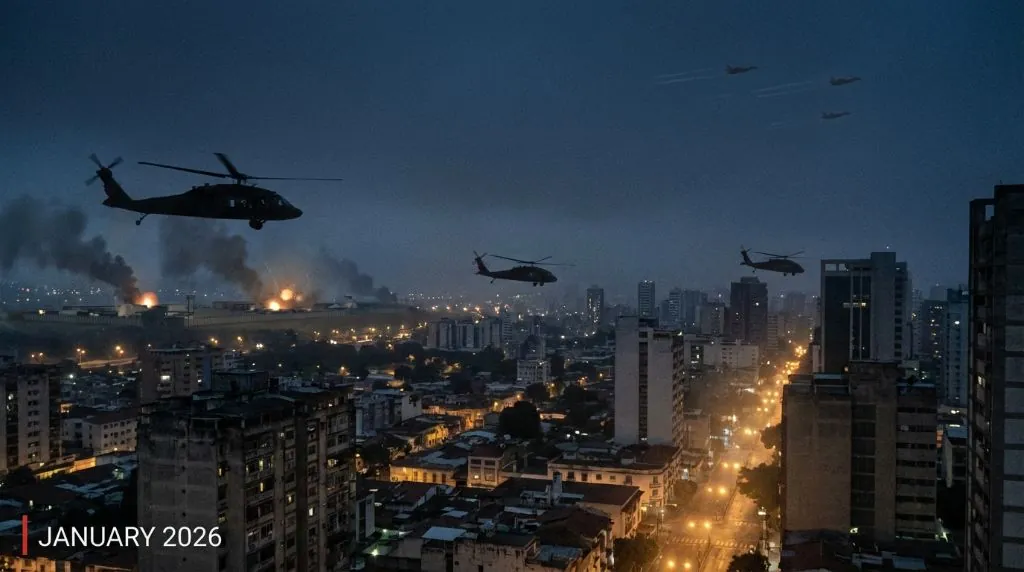
In the predawn hours of January 3, 2026, the world witnessed an event that many thought belonged only to the pages of history books or Hollywood scripts. The United States military launched a massive coordinated strike on Venezuela and successfully captured a sitting head of state—President Nicolás Maduro. The operation, codenamed Operation Absolute Resolve, involved 150 aircraft, elite Delta Force operators, and warships positioned strategically in the Caribbean. This wasn’t just another military engagement; it represented a seismic shift in how powerful nations might pursue justice across international borders in the 21st century.
The US capture of President Maduro has ignited fierce debates about sovereignty, international law, and the limits of American power. For years, Maduro stood accused of transforming Venezuela into a narco-state, trafficking cocaine into American communities, and crushing his own people under authoritarian rule. Yet capturing him required bypassing every traditional diplomatic channel and unleashing military force on a scale not seen in Latin America since the 1989 Panama invasion. This article takes you inside the shocking Venezuela military operation, revealing how it unfolded, why the United States justified such extraordinary action, and what consequences now ripple across the globe.
What Led to the US Capture of President Maduro?
Years of Escalating Tensions
The road to Operation Absolute Resolve was paved with years of deteriorating relations between Washington and Caracas. Venezuela, once a prosperous oil-rich nation, descended into economic collapse and humanitarian crisis under Maduro’s leadership. Hyperinflation destroyed the currency, millions of citizens fled the country, and basic necessities became luxuries. But what truly caught Washington’s attention was the transformation of Venezuela’s government into what US authorities called a criminal enterprise.
In 2020, during President Trump’s first term, the US Department of Justice issued a sweeping indictment against Maduro. The charges were extraordinary: narco-terrorism conspiracy and cocaine importation conspiracy. Federal prosecutors alleged that Maduro and high-ranking officials, including his wife Cilia Flores, partnered with Colombian guerrilla groups like the FARC to flood American streets with cocaine. According to the indictment, this wasn’t merely corruption—it was a systematic operation run by what the US termed the “Cartel de los Soles” (Cartel of the Suns), named after the sun insignia worn by Venezuelan generals. BBC News
The Failure of Diplomacy
For years, the international community attempted to resolve the Venezuelan crisis through sanctions, diplomatic pressure, and negotiations. The United Nations, the Organization of American States, and even the International Criminal Court opened investigations into human rights abuses. Yet every diplomatic avenue seemed to lead nowhere. Maduro remained firmly in power, backed by military loyalists, Russian military hardware, and Chinese economic support.
By late 2025, the Trump administration concluded that traditional methods had failed. The decision to pursue a military solution represented a fundamental shift in US foreign policy—one that would treat Maduro not as a sovereign leader, but as an indicted criminal who happened to be hiding behind the office of the presidency. This framing would become central to how the US capture of President Maduro was legally justified.
Operation Absolute Resolve: How the US Captured President Maduro
The Military Buildup
Long before the January 3rd strike, the United States had been quietly positioning assets throughout the Caribbean and Latin America. Operation Southern Spear, a precursor mission, involved the deployment of the USS Gerald R. Ford aircraft carrier strike group and 11 additional warships to the region. US forces conducted months of surveillance, destroyed over 30 smuggling boats linked to Venezuelan drug trafficking, and established air superiority in international waters surrounding Venezuela. The New York Times
Intelligence agencies worked around the clock to track Maduro’s movements and identify vulnerabilities in Venezuela’s defense systems. Despite billions of dollars worth of Russian-made air defense systems—including S-300VM, Buk-M2, and Pantsir-S1 platforms—US intelligence concluded these could be neutralized without direct engagement. The message to other adversarial nations would be unmistakable: even the most sophisticated Russian defense architectures could be rendered ineffective against American military technology.
The Strike Begins
In the hours before dawn on January 3, 2026, residents of Caracas heard the roar of low-flying aircraft followed by powerful explosions. The Venezuela military operation had begun. Here’s how the mission unfolded:
Phase One: Air Superiority (00:00 – 00:45)
- 150 aircraft launched from 20 different bases across the region
- B-1 bombers and armed drones struck Venezuelan air defense installations
- F-35 and F-22 fighter jets established complete air dominance
- Within 45 minutes, Venezuela’s ability to contest American airspace was eliminated
Phase Two: The Extraction (00:45 – 02:20)
- US Army Delta Force operators flew helicopters at extremely low altitude—just 100 feet above the Caribbean waters—to avoid radar detection
- The target: Fort Tiuna military compound in Caracas, where intelligence indicated Maduro was spending the night
- Delta Force breached the compound with precision and speed
- According to President Trump’s later statement, Maduro attempted to flee to a steel-reinforced safe room but “wasn’t able to make it to the door because our guys were so fast”
- Both Maduro and his wife, Cilia Flores, were apprehended without significant casualties
The entire Operation Absolute Resolve lasted approximately two hours and twenty minutes—a testament to the overwhelming force and meticulous planning behind the US capture of President Maduro. Reuters
The Journey to American Custody
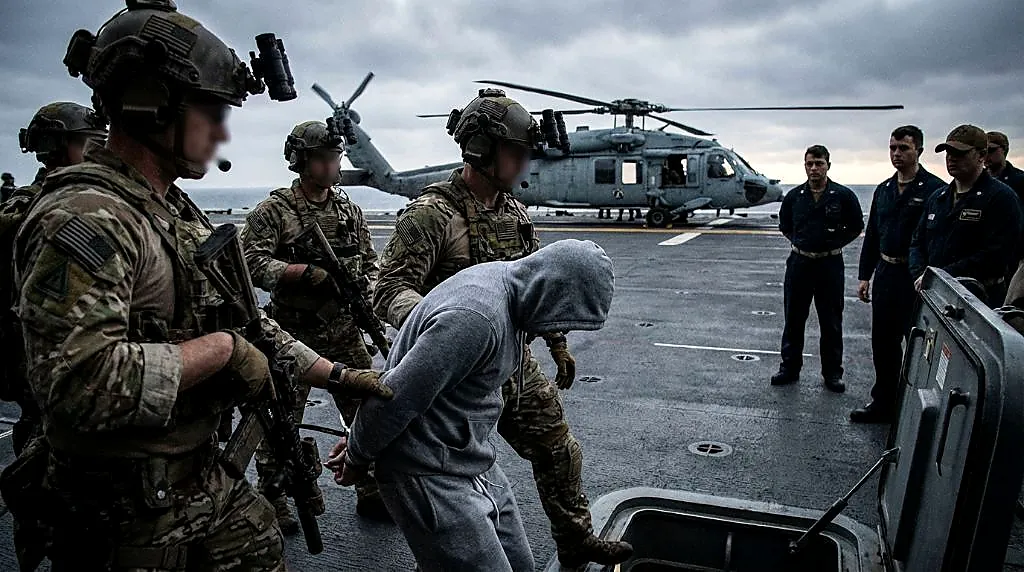
Following his capture, Maduro was immediately transported via military helicopter to the USS Iwo Jima, an amphibious assault ship waiting in Caribbean waters. President Trump later shared a striking photograph on Truth Social showing Maduro dressed in a gray sweatsuit, blindfolded, and restrained aboard the ship. The image instantly became one of the most discussed photographs of 2026, symbolizing the unprecedented nature of the operation.
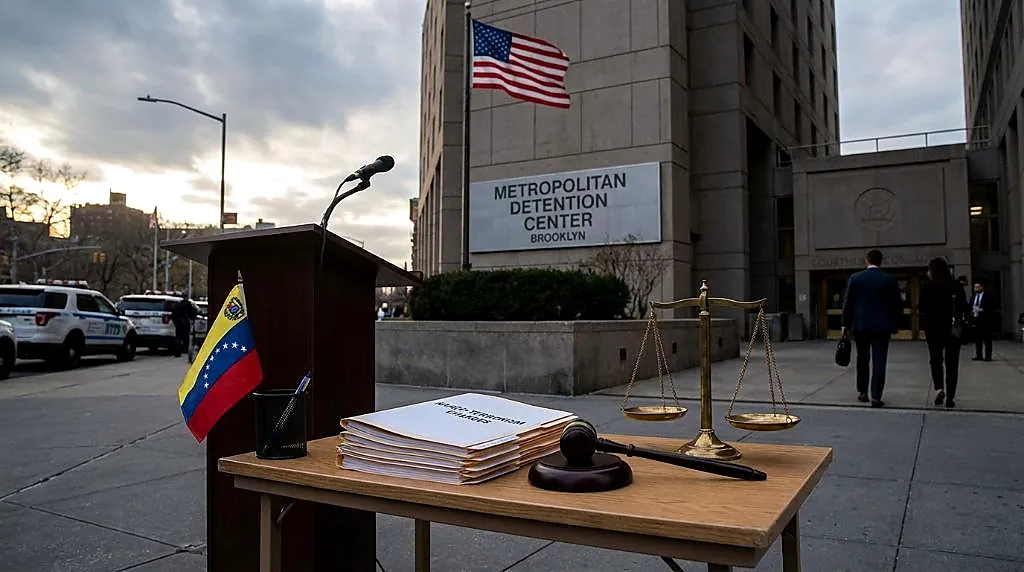
From the USS Iwo Jima, Maduro was flown to Stewart Air National Guard Base in New York, then processed at a Drug Enforcement Administration facility in Manhattan. His final destination: the Metropolitan Detention Center in Brooklyn, where he would await trial on the 2020 narco-terrorism charges. His wife, Cilia Flores, followed the same path, facing her own conspiracy charges. NPR
The Legal Justification: Law Enforcement or Act of War?
The “Ker-Frisbie Doctrine” Gambit
Perhaps the most controversial aspect of the US capture of President Maduro isn’t the military action itself, but how the Trump administration legally framed it. Rather than calling it an invasion or an act of war, Washington characterized Operation Absolute Resolve as a “law enforcement operation” designed to execute an outstanding arrest warrant.
This distinction relies on a controversial legal principle known as the Ker-Frisbie doctrine. Established through two Supreme Court cases in the late 19th and mid-20th centuries, this doctrine holds that US courts can exercise jurisdiction over a defendant regardless of how they were brought into the country—even through illegal abduction. In essence, the doctrine says the ends (having jurisdiction) justify the means (however the person arrived).
The Trump administration argued that because Maduro was under a valid federal indictment for narco-terrorism, the United States had the legal right to arrest him and bring him to trial. The fact that this “arrest” required 150 military aircraft, airstrikes on a sovereign nation’s military installations, and the extraction of a sitting head of state was presented as merely the necessary force required to execute the warrant.
International Law Questions
Critics immediately challenged this legal framework. International law scholars pointed out that the operation violated multiple fundamental principles:
- Sovereign Immunity: Heads of state traditionally enjoy immunity from foreign prosecution while in office
- Prohibition on Aggression: The UN Charter forbids the use of military force against another nation’s territorial integrity
- Extradition Treaties: Proper channels exist for bringing accused criminals to justice across borders
The Venezuela military operation effectively bypassed all these established norms. As one legal expert noted, “You cannot simply call an invasion a ‘law enforcement operation’ and expect the international community to accept that framing. This sets a dangerous precedent that any powerful nation could use to justify military action against leaders it has indicted.” Bloomberg Law
The Panama Precedent
The timing of Operation Absolute Resolve was symbolically significant. The mission occurred exactly 36 years to the day after the United States invaded Panama and captured Manuel Noriega on December 20, 1989. Like Maduro, Noriega had been indicted on drug trafficking charges. Like Maduro, he was a head of state captured through military force and brought to the United States for trial.
The Panama operation, known as Operation Just Cause, faced similar international criticism at the time. The UN General Assembly condemned it as a violation of international law. Yet Noriega was ultimately convicted in US federal court, and his conviction was upheld despite challenges based on how he was captured. The Trump administration clearly studied this historical precedent when planning the US capture of President Maduro.
Global Reactions: A World Divided
Condemnation from Adversaries
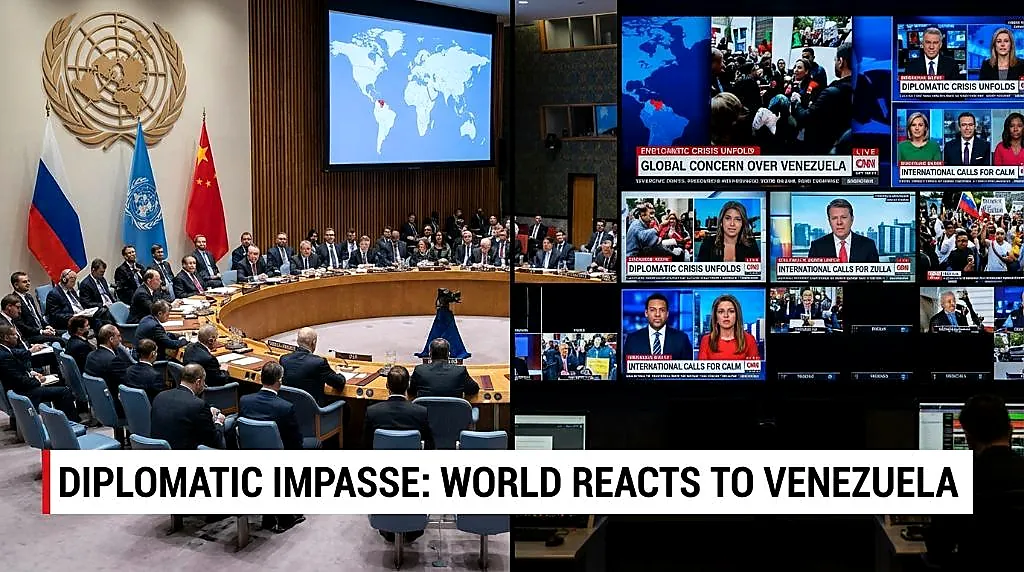
The international response to the Venezuela military operation revealed the deep fractures in the global order. Predictably, nations that view themselves as counterweights to American power responded with sharp condemnation.
Russia called the operation “an act of armed aggression” and demanded an emergency UN Security Council session. Russian Foreign Minister Sergei Lavrov stated, “This blatant violation of Venezuelan sovereignty demonstrates that the United States believes it can act with complete impunity anywhere in the world.”
China issued a statement “strongly condemning” the use of military force and what it termed “hegemonic behavior.” Chinese officials noted that such actions undermine the principles of non-interference that have governed international relations since World War II. Al Jazeera
United Nations Secretary-General António Guterres expressed being “deeply concerned” about the operation and called for respect for international law, though he stopped short of explicit condemnation. Mexico, Cuba, Bolivia, and Nicaragua issued a joint statement condemning the US capture of President Maduro as a violation of the UN Charter and Latin American sovereignty.
Support from Allies
Not all reactions were negative. Several US allies and Latin American nations expressed qualified support or outright celebration.
Argentina’s President Javier Milei, a libertarian who has positioned himself as a close ally of President Trump, celebrated the capture. “A narco-terrorist dictator has finally been brought to justice,” Milei stated. “This is a victory for freedom and the rule of law.”
The United Kingdom offered a carefully calibrated response. While emphasizing the importance of international law, British officials stated they would “shed no tears” for Maduro, given his regime’s human rights record.
Several Latin American democracies, including Colombia and Ecuador, while not explicitly endorsing the military action, expressed hope that Maduro’s removal might finally bring stability and democracy to Venezuela.
Divided America
Within the United States, reactions split largely along partisan lines. Republican lawmakers praised the operation as decisive law enforcement action against a narco-terrorist. Senator Marco Rubio stated, “President Trump did what needed to be done. Maduro was poisoning American communities with cocaine while torturing his own people. He’s a criminal, and now he’ll face justice.”
Democratic lawmakers expressed deep concern about the constitutional and legal implications. Many argued that such a massive military operation should have required congressional authorization. Representative Alexandria Ocasio-Cortez called it “an illegal war that violates both international law and the US Constitution’s war powers clause.” The Guardian
Constitutional scholars debated whether the operation fell under the president’s authority to conduct law enforcement operations or whether it constituted an act of war requiring congressional approval. The question remains unresolved as of this writing.
What Happens Next: The Path Forward
US Control of Venezuela
Perhaps the most startling aspect of the US capture of President Maduro is what President Trump announced would come after. In a statement that shocked diplomats worldwide, Trump declared that the United States would “run the country” until a “safe, proper and judicious transition” could be accomplished.
Trump invoked what he called the “Pottery Barn rule”—”you break it, you own it.” He emphasized Venezuela’s vast oil reserves, stating, “We want to surround ourselves with energy. We have tremendous energy in that country. It’s very important that we protect it. We need that for ourselves. We need that for the world.”
This unprecedented declaration raised immediate questions: What does it mean for the US to “run” Venezuela? Will American administrators take over government ministries? Will US oil companies gain control of Venezuelan petroleum resources? How long will this arrangement last?
The Legal Proceedings
Maduro now faces trial in the Southern District of New York on charges including:
- Narco-terrorism conspiracy
- Conspiracy to import cocaine into the United States
- Weapons-related charges
- Money laundering
If convicted on all counts, he could face life in prison. His legal team has already indicated they will challenge the jurisdiction of US courts and argue that his capture violated international law. However, the Ker-Frisbie doctrine precedent suggests these challenges may not succeed.
Venezuela’s Future
The immediate aftermath in Venezuela has been chaotic. With Maduro captured and Vice President Delcy Rodríguez’s whereabouts unknown, the country faces a power vacuum. The United States has indicated it will work with the Venezuelan opposition, particularly those who supported opposition leader María Corina Machado and Edmundo González Urrutia in contested elections.
However, experts warn of significant challenges ahead:
Potential for Guerrilla Warfare: Venezuela has thousands of armed “colectivos”—pro-government militias—and criminalized military units that may resist American presence. The potential for a prolonged, Iraq-style insurgency is real.
Humanitarian Crisis: Venezuela’s infrastructure is already devastated. Rebuilding while managing security will require enormous resources and time.
Regional Stability: The operation has sent shockwaves through Latin America. Other left-leaning governments, particularly in Bolivia and Nicaragua, fear they could be next if indicted by US authorities.
Geopolitical Implications: A New Era of Unilateral Action?
Message to Global Adversaries
The Venezuela military operation was designed to send messages far beyond Caracas. The ease with which US forces neutralized Russian-made defense systems demonstrated technological superiority to Moscow. The willingness to act unilaterally despite international criticism signaled to Beijing that American power projection remains robust.
Perhaps most significantly, the operation showed Iran that its own Russian-made air defense architecture—similar to what Venezuela possessed—might not protect it in a future confrontation. The demonstration of capability without direct engagement with the defense systems was itself a form of strategic communication.
Concerns Among Allies
Yet the operation also rattled American allies. If the United States is willing to invade a sovereign nation to execute an arrest warrant, what other unilateral actions might it take? Danish officials privately expressed concern that previous Trump administration rhetoric about purchasing Greenland might now be backed by force if negotiations fail.
The US capture of President Maduro may have inadvertently created anxiety even among friendly nations about the predictability and limits of American power.
The Future of International Law
International law scholars describe this moment as potentially transformative—or catastrophic—for the international legal order. If powerful nations can simply declare wanted leaders to be criminals and use military force to apprehend them, the principle of sovereign equality that has governed international relations since the Peace of Westphalia in 1648 could collapse.
Alternatively, if the operation is seen as a justified exception for truly criminal regimes involved in terrorism and drug trafficking, it might establish a new norm: that head-of-state immunity does not protect those who transform their governments into criminal enterprises.
Lessons and Perspectives: Understanding the Operation
The Military Excellence
From a purely operational standpoint, Operation Absolute Resolve demonstrated extraordinary military capability. The coordination of 150 aircraft, special operations forces, naval assets, and intelligence resources resulted in mission success with minimal casualties. The speed and precision of the extraction—completing the entire operation in just over two hours—showcased American military superiority.
For military analysts, the operation provides valuable lessons about power projection, the neutralization of sophisticated air defenses, and the execution of high-risk extractions in hostile territory.
The Legal Ambiguity
The legal framing of the US capture of President Maduro remains deeply controversial. By characterizing a military invasion as a law enforcement operation, the Trump administration has created legal ambiguity that will be debated for years. The outcome of Maduro’s trial—and any legal challenges to US jurisdiction—will establish important precedents.
Legal scholars note that while the Ker-Frisbie doctrine may allow the trial to proceed, it doesn’t make the capture itself legal under international law. These are separate questions that the legal system must now address.
The Moral Complexity
The moral dimensions of the operation resist easy categorization. Maduro’s regime was credibly accused of heinous human rights abuses, election fraud, and transforming Venezuela into a narco-state. Many Venezuelans celebrated his capture. Yet the operation violated fundamental principles of sovereignty and international law that exist to prevent powerful nations from dominating weaker ones.
This moral complexity—balancing justice for victims against respect for international norms—defines the central dilemma of the Venezuela military operation.
Conclusion: An Unprecedented Moment
The US capture of President Maduro through Operation Absolute Resolve represents one of the most significant and controversial American military actions of the 21st century. It combined overwhelming military force, legal innovation, and geopolitical messaging in ways that will shape international relations for years to come.
For supporters, the operation demonstrated that criminals cannot hide behind the presidency, that American justice has global reach, and that decisive leadership can solve problems that diplomacy cannot. It showed that narco-terrorists who poison American communities will ultimately face consequences.
For critics, it represented a dangerous precedent that undermines international law, threatens global stability, and could invite other powerful nations to justify military interventions using similar logic. It raised the specter of might making right in international affairs.
What remains clear is that the Venezuela military operation has fundamentally changed the conversation about sovereignty, justice, and the limits of American power. As Maduro awaits trial in Brooklyn, as Venezuela navigates an uncertain future under American oversight, and as the international community processes the implications, one thing is certain: the world has entered uncharted territory. The US capture of President Maduro ensures that debates about justice, law, and power will continue long after the operation itself has ended.
The events of January 3, 2026, will be studied, debated, and referenced for generations. Whether they represent a new model for addressing criminal regimes or a cautionary tale about unchecked power remains to be seen. What we witnessed was history being made in real time—and the story is far from over.
Editorial Note
This article reflects The Global Current’s commitment to providing empowering and actionable insights for understanding complex international events. The principles of thorough investigation, balanced reporting, and ethical journalism align with our core values of integrity, respect, and empowerment. We believe that by examining events like the US capture of President Maduro from multiple perspectives—military, legal, moral, and geopolitical—readers can form informed opinions about the direction of international relations and the role of justice in global affairs. Our goal is to provide comprehensive coverage that respects the complexity of these issues while making them accessible to all readers.