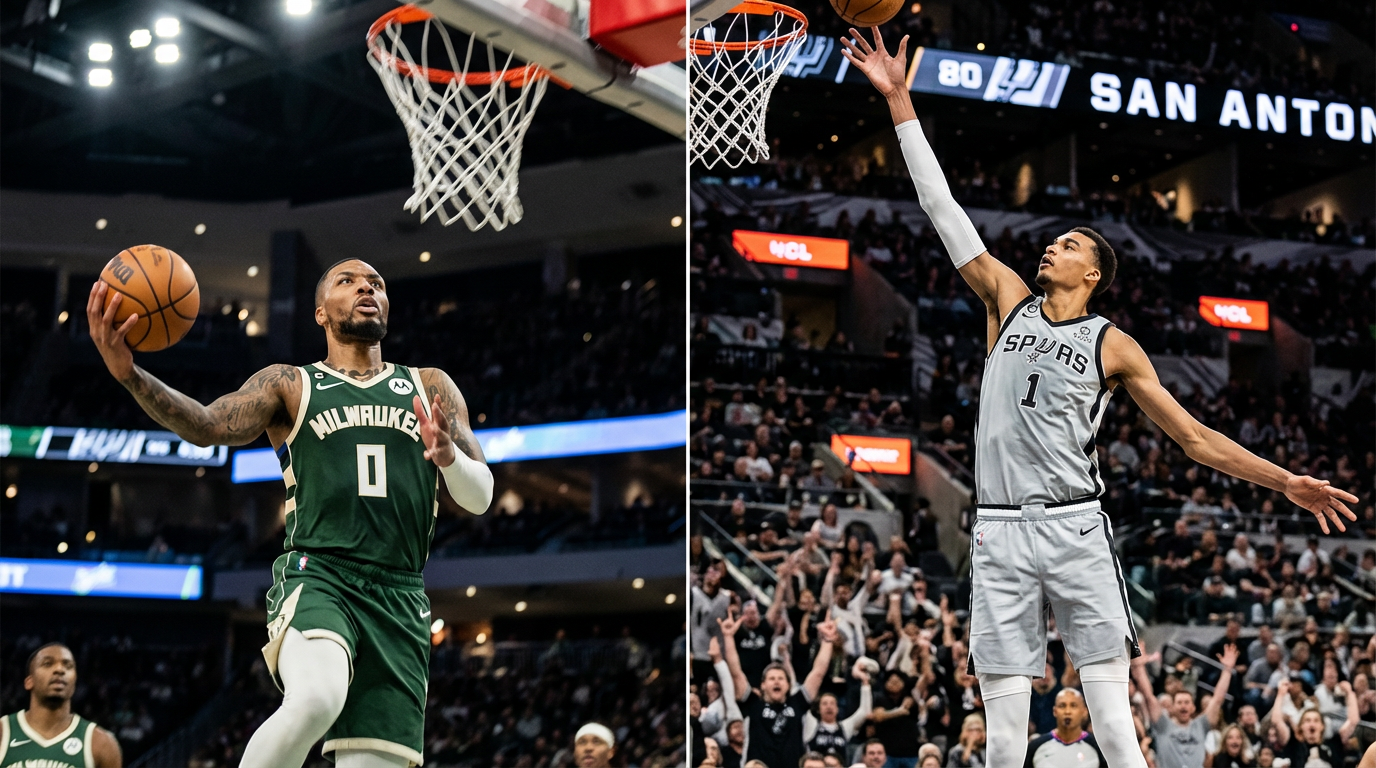
The landscape of professional basketball is undergoing its most dramatic transformation in decades. NBA player movement has reached unprecedented levels, with superstar trades reshaping championship contenders, free agency contracts breaking financial records, and a new generation of international talent redefining what’s possible on the court. From Damian Lillard’s seismic move to Milwaukee to Victor Wembanyama’s generational impact in San Antonio, the league is witnessing a fundamental shift in how teams build rosters, how players navigate their careers, and how global talent is revolutionizing the game. This evolution represents more than just transactions on paper—it signals a new era where basketball transcends borders, where young stars command unprecedented influence, and where the pursuit of championship glory drives franchises to make bold, transformative decisions. Understanding these changes isn’t just about following sports headlines; it’s about witnessing the birth of a truly global basketball ecosystem that will define the sport for generations to come.
The Blockbuster Trades That Redefined Championship Contention
Damian Lillard’s Journey to Milwaukee: A Franchise-Altering Move
On September 27, 2023, the NBA landscape shifted dramatically when the Portland Trail Blazers traded their beloved franchise cornerstone, seven-time All-Star Damian Lillard, to the Milwaukee Bucks. This NBA player movement wasn’t just significant—it was seismic. The complex three-team deal also involved the Phoenix Suns and represented Portland’s complete strategic pivot from contention to rebuilding.
The Trade Breakdown:
The Milwaukee Bucks received Dame Lillard, instantly creating one of the league’s most formidable backcourt partnerships alongside two-time MVP Giannis Antetokounmpo. For Portland, the return package was substantial: Jrue Holiday, Deandre Ayton, Toumani Camara, plus valuable future draft capital including a 2028 first-round pick swap, a 2029 first-round pick, and a 2030 first-round pick swap. The Phoenix Suns acquired Jusuf Nurkić, Nassir Little, Keon Johnson, and Grayson Allen to bolster their championship roster.
This trade exemplified modern NBA player movement where loyalty takes a backseat to championship aspirations. Lillard, who had spent his entire 11-year career in Portland and became the franchise’s all-time leading scorer, finally got his wish to compete for a title. For Milwaukee, pairing Lillard’s elite scoring and playmaking with Giannis’s dominance created an immediate championship threat in the Eastern Conference.
James Harden’s Remarkable Renaissance in Los Angeles
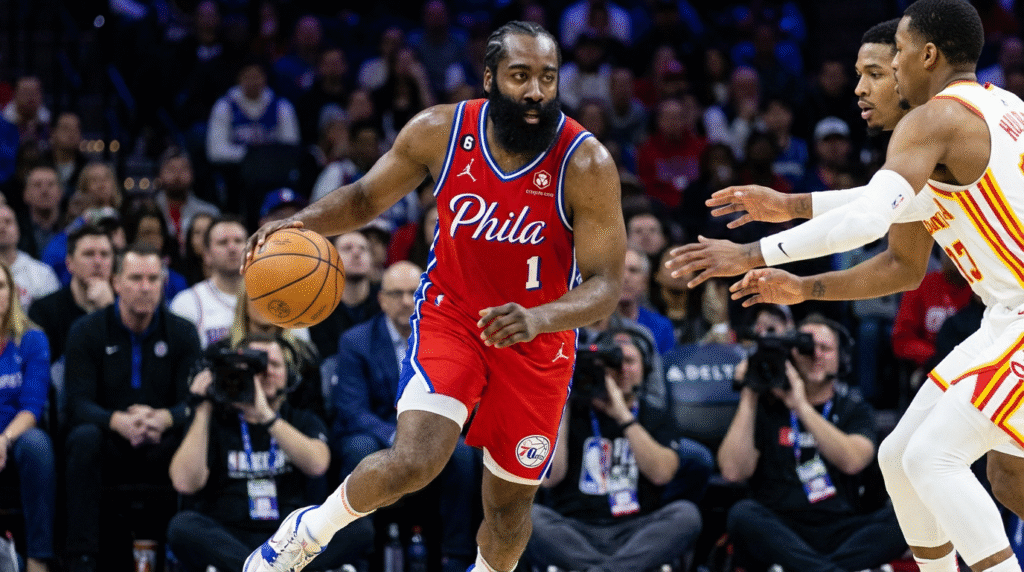
While many questioned whether James Harden’s best days were behind him, the veteran guard has silenced critics with performances that defy both age and expectations. NBA player movement brought Harden to the Los Angeles Clippers, where he’s experiencing a career resurgence that few predicted.
During the 2024-25 season, at age 36, Harden posted impressive numbers: 22.8 points, 8.7 assists, and 5.8 rebounds per game across 79 games, earning his 11th All-Star selection. His 2025-26 campaign has been even more extraordinary, with current averages of 25.9 points, 7.9 assists, and 4.9 rebounds per game while shooting 43.2% from the field and 36.2% from three-point range.
The Clippers have firmly stated they have no intention of trading Harden, viewing him as integral to their championship pursuit alongside Kawhi Leonard when healthy. This stability represents a shift from Harden’s previous stops, where NBA player movement rumors constantly swirled around him.
Free Agency Revolution: Record-Breaking Contracts Reshape the League
Young Stars Secure Generational Wealth
The 2024-2025 free agency period witnessed unprecedented financial investments in both established stars and emerging talent. These contracts reflect teams’ confidence in locking down core players early rather than risking NBA player movement through unrestricted free agency.
Major Contract Extensions:
Chet Holmgren led the way with a massive five-year, $250 million maximum extension with the Oklahoma City Thunder, rewarding his contributions to their championship run. Keegan Murray secured five years and $140 million from the Sacramento Kings, while Christian Braun earned five years and $125 million from the Denver Nuggets. Dyson Daniels signed a four-year, $100 million extension with the Atlanta Hawks.
These pre-emptive extensions represent a strategic shift in how franchises approach NBA player movement. Rather than allowing young stars to reach restricted free agency—where complications and offer sheets can create tension—teams are proactively securing their futures with long-term commitments.
Veterans Command Premium Deals
Established superstars continued commanding massive contracts. Kevin Durant signed a two-year, $90 million extension with the Houston Rockets, while LeBron James exercised his $52.6 million player option with the Los Angeles Lakers. These deals demonstrate that championship experience and leadership remain highly valued commodities in an increasingly youth-focused league.
The balance between investing in emerging talent and retaining veteran leadership has become central to successful team building. Smart organizations recognize that sustainable success requires both the energy of youth and the wisdom of experience.
Victor Wembanyama: The Generational Talent Transforming Basketball
A Rookie Season for the Ages
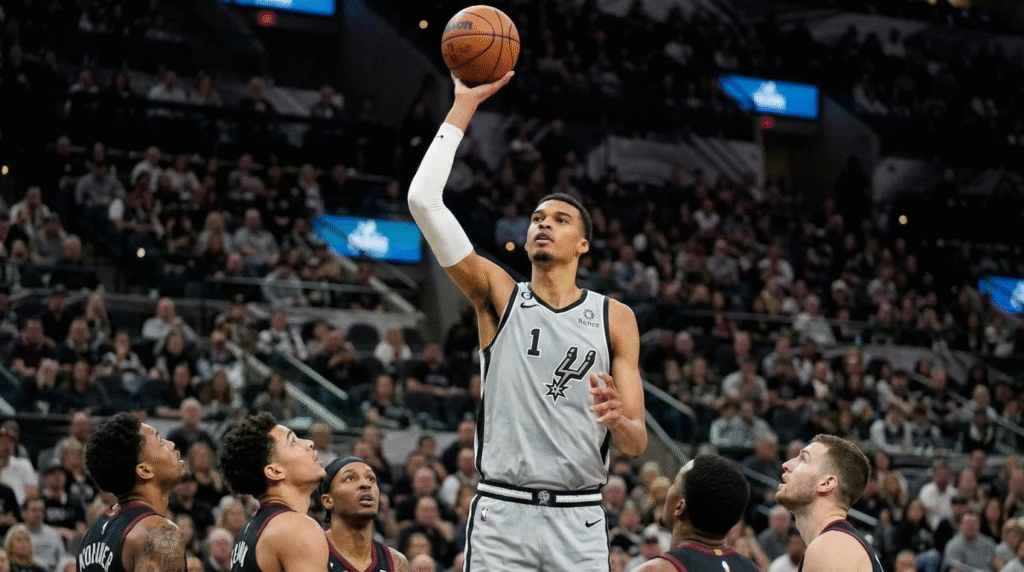
No discussion of NBA player movement and league evolution is complete without examining Victor Wembanyama’s unprecedented impact. The French sensation didn’t just enter the league—he revolutionized it from day one.
Wembanyama’s 2023-24 Rookie Statistics:
- 21.4 points per game
- 10.6 rebounds per game (consistent double-double)
- 3.9 assists per game (exceptional for a center)
- 3.6 blocks per game (elite rim protection)
- 46.5% field goal percentage with 128 three-pointers made
- Unanimous NBA Rookie of the Year
Wembanyama became the first player in NBA history to record 100+ points and 15+ blocks in his first three games of a season. His combination of size (7’4″), skill, and basketball IQ is genuinely unprecedented. He protects the rim like a traditional center while handling the ball and shooting from distance like a guard—a blend never before seen in basketball.
Sophomore Ascension: Building on Excellence
Wembanyama’s second season has shown continued growth. His 2024-25 campaign featured 24.3 points, 11.0 rebounds, and 3.8 blocks per game, earning his first All-Star Game selection. His three-point shooting and playmaking abilities have continued developing, making him increasingly difficult to defend.
Comparisons to legends like Kareem Abdul-Jabbar and Hakeem Olajuwon are common, but Wembanyama possesses modern perimeter versatility those legends never needed. He represents the future of position-less basketball—a player whose skill set transcends traditional categories.
Global Impact: France’s Basketball Renaissance
Wembanyama’s success has triggered a basketball revolution in France and across Europe. NBA viewership in France has increased by over 300%. NBA academies are expanding throughout the country. French players have become highly sought after in NBA drafts. International scouting in European markets has intensified dramatically.
This NBA player movement from Europe to America is no longer a trickle—it’s a flood. Wembanyama serves as both inspiration and proof that European development systems can produce elite NBA talent. His success validates the international pathway and encourages the next generation of global players.
Rising Stars: The Next Generation Claims Center Stage
Paolo Banchero: Orlando’s Franchise Cornerstone
Paolo Banchero has established himself as one of the league’s premier young talents. His 2025-26 season performance—20.7 points, 8.4 rebounds, and 4.7 assists per game with 45% field goal shooting—demonstrates remarkable consistency and improvement. The Orlando Magic have built their entire rebuilding strategy around Banchero, and he’s rewarding their faith.
His physical development, basketball IQ, and ability to create offense both for himself and teammates make him a complete player. Banchero represents the modern forward: versatile, skilled, and equally dangerous inside and outside.
Chet Holmgren: Championship Pedigree Already Established
Chet Holmgren has accomplished what many young players only dream about—winning an NBA championship. His 2024-25 season with the Oklahoma City Thunder (15.0 points, 8.0 rebounds, 2.2 blocks per game) was integral to their title run. His five-year, $250 million contract extension reflects his value.
Holmgren’s unique combination of length, shooting ability, and defensive instincts makes him one of the league’s most versatile big men. His partnership with Shai Gilgeous-Alexander has created a formidable duo that should contend for championships for years to come.

International Talent Revolution: Basketball’s Global Takeover
Record-Breaking International Representation
The 2025-26 NBA season marked a historic milestone: 135 international players from 43 countries on opening-night rosters. Both figures represent all-time records. Canada and France lead in player count, while Africa and Asia show significant growth. European leagues have become primary development pipelines for NBA talent.
This unprecedented international presence isn’t coincidental—it’s the result of decades of global basketball development finally bearing fruit. NBA player movement now routinely includes prospects from every continent, and international experience is viewed as an asset rather than a question mark.
The International Elite: Jokić, Giannis, and Dončić
Three international superstars have redefined NBA excellence:
Nikola Jokić (Serbia) continues revolutionizing the center position with his playmaking and scoring versatility. Multiple MVP awards validate his dominance.
Giannis Antetokounmpo (Greece) maintains his position as the league’s most physically imposing player. His two MVP awards and 2021 championship prove his all-around excellence.
Luka Dončić (Slovenia) leads the league in triple-doubles with offensive creativity rarely seen. His basketball IQ and skill level make him a perennial MVP candidate.
These three players have fundamentally changed how basketball is played and taught globally. Their influence extends beyond statistics—they’ve proven that international players can be the absolute best in the world, not just solid contributors.
The Decline of Player Empowerment: Teams Regain Control
Shifting Power Dynamics in NBA Player Movement
The NBA’s player empowerment era, which saw superstars increasingly controlling their destinations through trade demands and free agency decisions, appears to be ending. Recent developments show teams becoming more resistant to player pressure:
Key Indicators:
- Luka Dončić was traded despite being a franchise cornerstone when contract negotiations stalled
- Miami has resisted Jimmy Butler’s trade demands
- Minnesota willingly traded Karl-Anthony Towns for better team fit
- Portland refused to accommodate Damian Lillard’s Miami preference
Strategic Shifts: Organizations Prioritize Long-Term Stability
Teams are taking firmer stances on several fronts:
Draft Capital Preservation: Organizations are increasingly reluctant to trade future first-round picks, having learned from past mistakes where aggressive NBA player movement depleted their ability to rebuild.
Contract Negotiations: Franchises are taking harder stances on maximum contracts and extensions, refusing to be held hostage by player demands.
Trade Leverage: Teams now explore multiple destinations rather than accommodating player preferences, maximizing return value.
Cultural Reset: Emphasis has shifted to team-first mentality over individual player empowerment, with organizations demanding buy-in from all roster members.
This evolution marks a potentially significant shift in NBA power dynamics. Organizations are reasserting control over franchise direction while still maintaining player-friendly environments—a delicate balance that favors long-term thinking over short-term appeasement.

Conference Dynamics: West Dominance and East Opportunity
Western Conference Maintains Superiority
The Western Conference has maintained superiority over the Eastern Conference for the 24th time in the past 27 years. This dominance stems from several factors:
Deeper Talent Pool: More Western teams possess legitimate championship aspirations. The playoff race consistently features more quality teams fighting for position.
Star Concentration: The West boasts a higher concentration of MVP-caliber players, making every matchup competitive and every playoff series a potential classic.
Competitive Depth: Overall team quality from top to bottom remains stronger in the West, meaning even lottery teams can compete on any given night.
Playoff Intensity: The path to the Finals through the Western Conference playoffs remains significantly more challenging, battle-testing champions before they reach the ultimate stage.
Eastern Conference Parity Creates Opportunities
While the West maintains overall superiority, the Eastern Conference offers unique dynamics:
Wide-Open Competition: Multiple teams have realistic championship chances, making predictions difficult and competition fierce.
Young Talent Emergence: Rising stars in Orlando, Atlanta, and other markets are rapidly developing, changing the competitive landscape.
Veteran Leadership: Established stars maintain competitive teams, providing stability and experience.
Strategic Opportunities: Smart organizations actively seek to capitalize on perceived conference weakness, viewing the path to the Finals as more achievable.
This competitive imbalance has sparked legitimate discussions about potential conference realignment or playoff format changes to ensure the best teams reach the postseason regardless of geographic location.
Future Trajectory: Basketball’s Evolution Continues
Emerging Trends Shaping Tomorrow’s NBA
International Player Pipeline: Continued growth from Europe, Africa, and Asia will further diversify the league. NBA academies worldwide are producing elite prospects at unprecedented rates.
Position-Less Basketball: Increasing emphasis on versatility and skill over traditional roles continues. Tomorrow’s stars will be defined by what they can do, not what position they play.
Analytics Revolution: Advanced metrics drive player evaluation and strategy. Teams employ sophisticated data analysis to identify undervalued skills and optimize performance.
Global Expansion: The NBA’s continued international growth includes potential European expansion teams, further cementing basketball as a global sport.
Technology Integration: Enhanced player development through AI and advanced analytics is revolutionizing training methods and injury prevention.
The Next Generation’s Unique Attributes
Young stars like Wembanyama, Banchero, and Holmgren represent a fundamental shift in basketball evolution:
- Unprecedented size-skill combinations that were once thought impossible
- Global basketball perspectives shaped by international competition and diverse coaching
- Advanced understanding of analytics and efficiency built into their games from youth
- International experience and cultural diversity that enriches team dynamics

Franchise-Building Evolution for Sustainable Success
Teams are adapting strategies to accommodate the new NBA landscape:
International Scouting Expansion: Increased investment in global talent identification has become essential, not optional.
Development Program Enhancement: Focus on skill development over physical attributes reflects the game’s evolution.
Cultural Integration: Emphasis on international player support and acclimation ensures foreign prospects maximize their potential.
Long-Term Planning: Greater emphasis on sustainable success over short-term gains drives decision-making.
Conclusion: A League Embracing Global Transformation
The NBA’s current landscape represents a watershed moment in professional basketball history. The convergence of international talent, emerging young superstars, evolving trade dynamics, and shifting power structures has created an environment of unprecedented change and opportunity.
Victor Wembanyama’s emergence as a generational talent, combined with continued dominance from international stars like Nikola Jokić, Giannis Antetokounmpo, and Luka Dončić, signals a permanent shift in basketball’s global power structure. The league’s record international representation and the success of European development systems have fundamentally altered how teams evaluate and develop talent.
Simultaneously, the potential decline of the player empowerment era and teams’ renewed emphasis on organizational control suggests a new chapter in NBA business dynamics. Organizations are becoming more strategic in their roster construction, prioritizing long-term sustainability over short-term player demands. This shift in NBA player movement philosophy may define the next decade of league operations.
The Western Conference’s continued dominance, alongside the Eastern Conference’s unprecedented parity, creates fascinating competitive dynamics that may influence future playoff formats and conference structures.
As the NBA continues its global expansion and technological integration, the league stands at the threshold of its most transformative period since the Magic Johnson-Larry Bird era of the 1980s. The next generation of stars promises to deliver basketball that is more international, analytical, and athletic than ever before.
The future of the NBA lies not in American dominance or unchecked player empowerment, but in a truly global, data-driven, and strategically sophisticated league. Basketball’s evolution from an American sport to a worldwide phenomenon isn’t coming—it’s already here. Teams, players, and fans who embrace this transformation will thrive in this exciting new era of professional basketball.
Editorial Note
This article reflects The Global Current’s commitment to providing empowering and actionable insights into the evolving world of professional sports. The transformation of NBA player movement—from blockbuster trades to international talent influx—aligns with our core values of celebrating global diversity, strategic innovation, and the pursuit of excellence. We believe that understanding these league-wide changes helps readers appreciate how professional basketball has become a truly global enterprise, where talent knows no borders and opportunity extends to every corner of the world. By examining these trends, we honor both the competitive spirit that drives athletes to greatness and the organizational strategy that builds championship teams. The NBA’s evolution into a worldwide phenomenon demonstrates how vision, talent development, and strategic thinking can transform an industry and inspire millions across the globe.