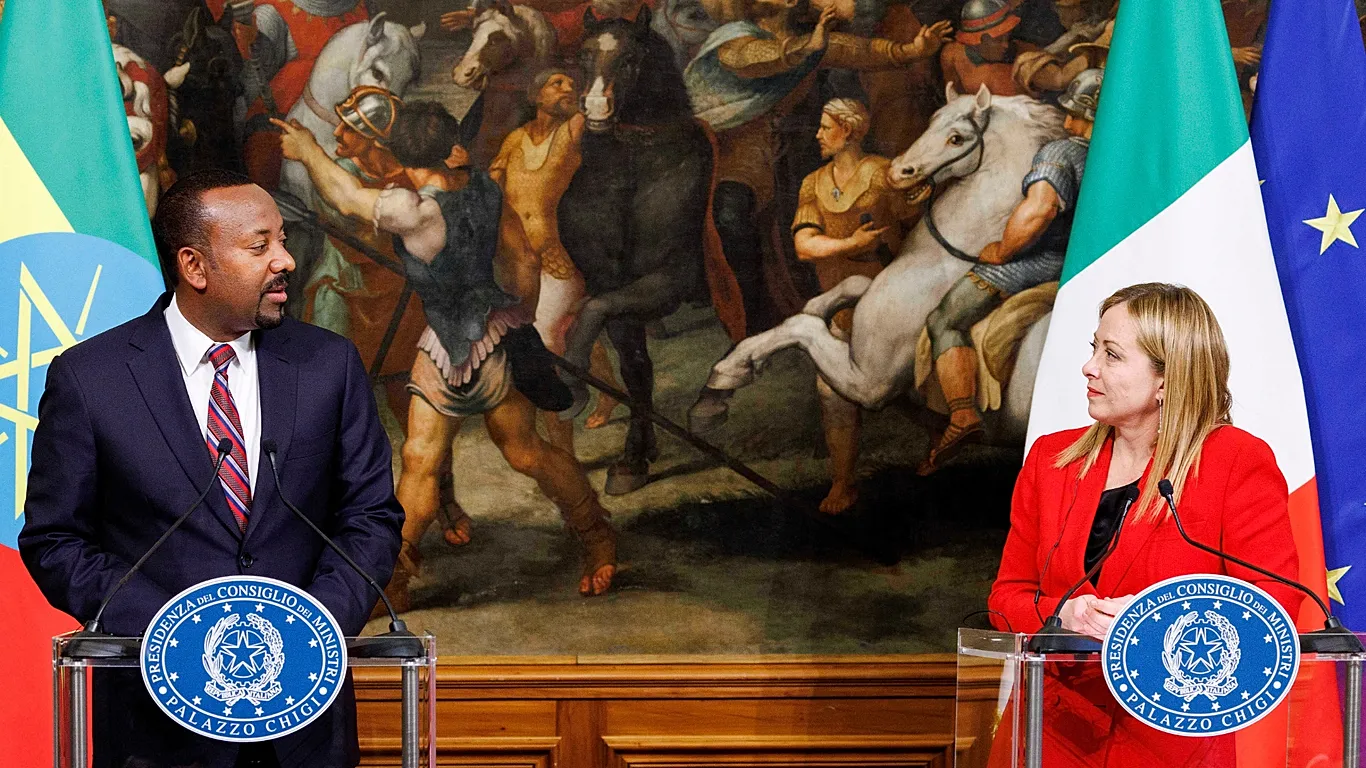
The second Italy-Africa Summit is more than a diplomatic event. It is a test of whether big promises can become real progress for real people. When Italy pledged deeper cooperation with African countries at the second Italy-Africa Summit in Addis Ababa, the message was clear: the next chapter must be built with Africa, not just for Africa. The summit focused on reviewing projects in key sectors like energy and infrastructure under the first phase of Italy’s Mattei Plan, with an emphasis on investment-led cooperation instead of classic aid models. That shift matters, because it changes expectations from “support” to “partnership.” Source
But cooperation is not only about budgets and agreements. Cooperation also has a human center: trust, dignity, shared outcomes, and consistent follow-through. This is where purpose-driven leadership becomes a practical tool, not a soft idea. The second Italy-Africa Summit invites leaders—government, business, and civil society—to lead with a clear “why,” so that commitments become actions that last.
[Image: A high-level Italy-Africa Summit meeting scene, leaders seated at a conference table in a formal setting, representing deeper cooperation and shared priorities.]
Alt text: Italy-Africa Summit leaders meeting to deepen cooperation and align on shared investment goals.
Source: Euronews (photo used in related coverage) — https://www.euronews.com/my-europe/2026/02/13/italy-reviews-progress-on-mattei-plan-at-africa-summit-in-ethiopia
What Happened at the Second Italy-Africa Summit?
At the second Italy-Africa Summit, Italy’s Prime Minister Giorgia Meloni told African heads of state that Italy wants to “build things together” and be more consistent with the needs of the countries involved. Ethiopia’s Prime Minister Abiy Ahmed framed the moment as a move “from dialogue to action,” pointing to the value of combining Africa’s energy and creativity with Europe’s capital, experience, and technology. Source
The summit also connected to the Mattei Plan, launched in 2024, which Italy positions as an investment-led cooperation approach rather than traditional aid. According to the Italian government, the Mattei Plan has involved 14 African countries and launched or advanced around 100 projects across energy, climate transition, agriculture, infrastructure, health care, water, education, and AI development. Source
Still, one of the sharpest reminders came from Kenyan analyst Nanjala Nyabola, who warned that summits can become “optics” if countries do not prepare clearly, map needs, and enter negotiations with real plans. In other words: purpose without execution is performance. Source
What is Purpose-Driven Leadership?
Purpose-driven leadership is a model where leaders motivate people by connecting daily work to a bigger mission. It goes beyond what an organization does and focuses on why it does it. In the context of the Italy-Africa Summit, purpose-driven leadership means building cooperation that is not only strategic, but also fair, human, and measurable.
A purpose-driven approach also protects partnerships from short-term politics. It helps leaders stay consistent when headlines change. And it helps teams make better trade-offs when resources are limited, because the “why” stays stable even when the “how” must adapt.
[Image: A leader speaking one-on-one with a team member, demonstrating trust, listening, and shared mission—symbolic of purpose-driven leadership behind Italy-Africa Summit cooperation.]
Alt text: Purpose-driven leadership supporting Italy-Africa Summit cooperation through listening and shared mission.
Source: AP story context (event coverage) — https://apnews.com/article/italy-africa-summit-ethiopia-134973f02aca02d29af8277f364c7f5c
Why Purpose-Driven Leadership Fits the Italy-Africa Summit Moment
1) Because “deeper cooperation” requires deeper trust
Deeper cooperation at the Italy-Africa Summit will be judged by credibility. Trust grows when projects deliver, when timelines are realistic, and when communities see benefits. Purpose-driven leadership keeps decision-makers focused on outcomes that people can feel.
2) Because investment-led cooperation needs shared guardrails
Investment can create jobs, skills, and better services. But it can also create harm if it ignores local needs, labor standards, or environmental limits. Purpose-driven leadership makes ethics part of the plan, not an afterthought.
3) Because Africa is not a single market—and leadership must be precise
The AP report highlights a key issue: outcomes depend on preparation and clarity of needs. Purpose-driven leadership forces teams to do the hard work early—mapping problems, defining success, and planning delivery. Source
Turning Italy-Africa Summit Promises into Everyday Action (A Practical Playbook)
Start with “Why”: Define the cooperation purpose in plain language
If the second Italy-Africa Summit is about deeper cooperation, leaders should be able to answer this in one sentence:
What is the human result we want in 12–24 months?
Action steps you can use in government, NGOs, or business:
- Write a one-line purpose for each project (example: “Reliable clean power for 200,000 homes.”)
- Define who benefits first, not last
- Publish the purpose where teams can see it weekly
Make it measurable: Build a scoreboard people trust
Purpose-driven leadership does not avoid numbers. It chooses the right numbers.
For Italy-Africa Summit projects, that can include:
- Delivery milestones (what will be built, by when)
- Skills transfer (how many people trained, in what roles)
- Local value (share of local suppliers and jobs)
- Climate impact (emissions avoided, water protected)
Lead ethically: Put “do no harm” into contracts and governance
Ethical cooperation is not just good PR. It reduces conflict, delays, and reputational risk.
A simple way forward:
- Add labor and environmental standards into procurement
- Require community feedback loops
- Protect data rights in digital and AI projects
- Commit to anti-corruption controls that are public and enforced
Build ownership: Co-design with local teams, not only consultants
If the Italy-Africa Summit is serious about building together, then project design must include African institutions, local engineers, local farmers, local health leaders, and local entrepreneurs from day one.
A good test:
- Can local teams maintain the project without outside help?
If not, the cooperation is not deep enough yet.
A Renewed, Sustainable Way Forward After the Italy-Africa Summit
The most important shift after the second Italy-Africa Summit is moving from announcements to routines. Cooperation becomes real when it enters calendars, budgets, dashboards, and accountability systems.
Here is a purpose-driven “way forward” checklist leaders can apply immediately:
- Make every Italy-Africa Summit pledge a project with an owner
- Set quarterly public progress updates
- Fund long-term maintenance, not only launch ceremonies
- Invest in people: training, tools, and leadership pipelines
- Treat migration discussions with dignity and fairness, not as leverage
- Align projects with climate resilience, not just short-term extraction
The AP coverage makes one thing clear: summits alone do not deliver change. Preparation, mapping needs, and real dialogue do. Purpose-driven leadership is the discipline that makes that possible—day after day, decision after decision. Source
Conclusion: The Italy-Africa Summit as a Leadership Mirror
The second Italy-Africa Summit put “deeper cooperation” on the table. Now leaders must prove what those words mean. Purpose-driven leadership offers a simple standard: if the purpose is shared, the process must be shared, and the benefits must be shared too.
When cooperation is built on clarity, ethics, and measurable delivery, it becomes more than diplomacy. It becomes a system for sustainable progress—one that respects local needs, strengthens institutions, and leaves communities stronger than before.
Editorial Note
This article reflects The Global Current’s commitment to providing empowering and actionable insights for personal and professional growth. The principles of purpose-driven leadership align with our core values of integrity, respect, and empowerment. We believe that by fostering a connection to a deeper purpose, leaders can unlock their full potential and inspire a new beginning for their teams and organizations.