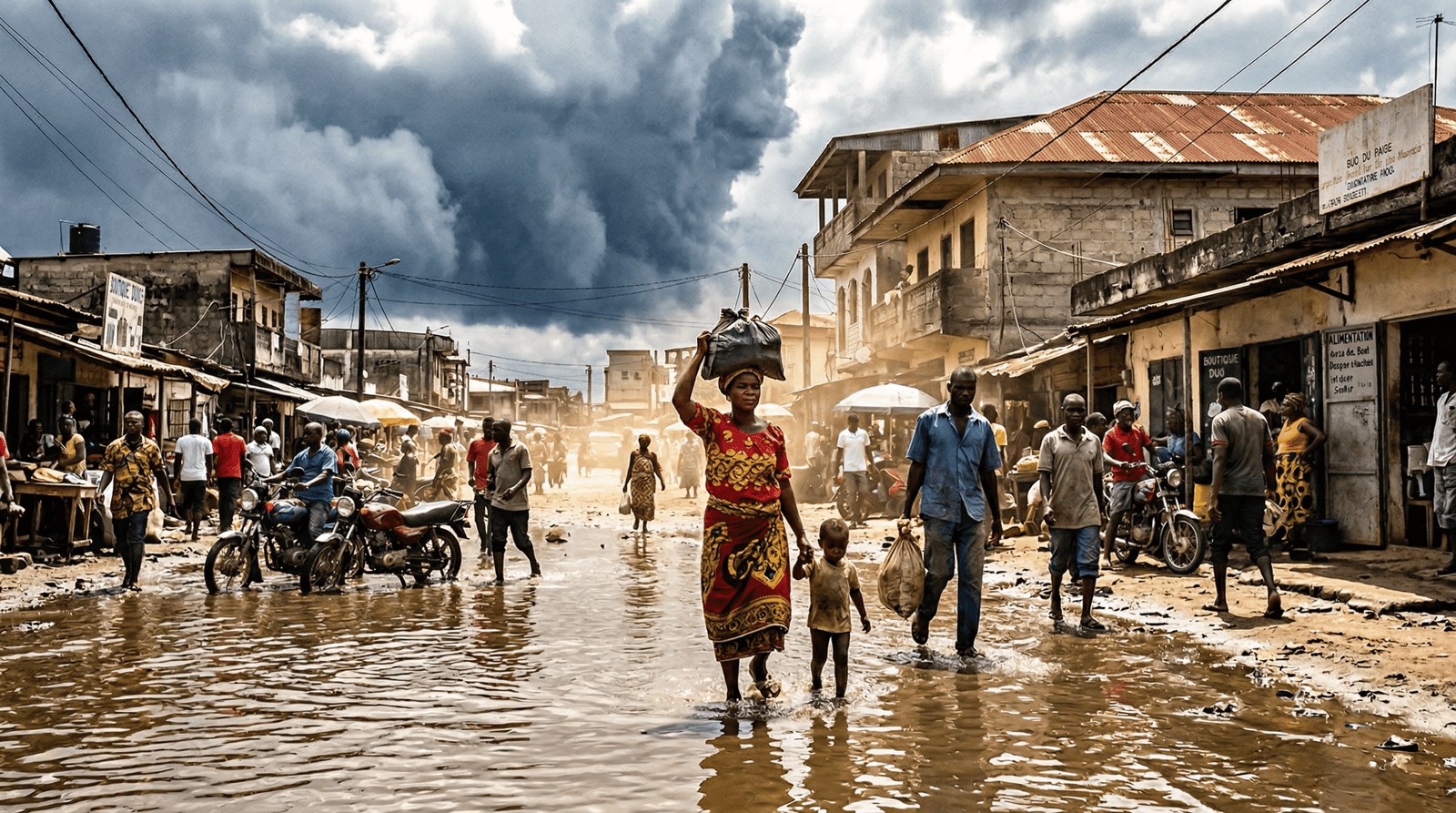
Africa is not one economy. It is a living network of 54 countries, each with its own strengths, risks, and pace of change. Yet when people talk about the economy of Africa, they often reduce it to a single headline: “resources” or “poverty” or “potential.” The truth is richer and more useful than that.
The economy of Africa is a story of resilience under pressure, rapid innovation in everyday life, and a new push to trade more within the continent. It is also a story of real constraints: high debt costs, climate shocks, energy gaps, and infrastructure that does not yet match the continent’s ambition. In this article, you will not just “learn facts.” You will gain a purpose-driven way to think, decide, and act—whether you are a leader, investor, founder, policy maker, student, or simply a curious reader who wants to understand where Africa is heading.
Because the biggest opportunity in the economy of Africa is not only what Africa has. It is what Africa can build—on purpose, with clear priorities, and with leadership that connects today’s work to tomorrow’s impact.
What “Purpose-Driven” Means for the Economy of Africa
Purpose-driven leadership is often discussed inside companies. But the same idea applies to nations, regions, and markets.
A purpose-driven approach to the economy of Africa means linking daily choices—budget decisions, business plans, hiring, trade rules, and infrastructure projects—to a clear “why” such as:
- creating decent jobs at scale
- making basic services reliable (power, transport, digital access)
- reducing vulnerability to external shocks
- building local value chains, not only exporting raw goods
- growing without destroying the environment
This matters because Africa is operating in what UNCTAD calls a “polycrisis” world: climate, conflict, technology shifts, and trade disruptions all interacting at once. Resilience becomes the difference between shock and damage. Source
A Clear Snapshot: Growth, but with Pressure Points
Many African economies have kept growing despite repeated shocks. The African Development Bank (AfDB) estimates Africa’s average real GDP growth slowed from 4.1% (2022) to 3.1% (2023), with headwinds from high food and energy prices, weak global demand, climate impacts, and instability in some places. It also projects a rebound to 3.7% (2024) and 4.3% (2025). Source
At the same time, the AfDB notes that inflation pressures and currency depreciation have hurt household purchasing power in many countries. It also highlights debt and fiscal constraints as key policy challenges. Source
The World Bank’s Africa’s Pulse (October 2024 edition) describes a “fragile recovery” and stresses that growth is often not high enough to reduce poverty fast. It also points to inflation patterns and diverging monetary policy choices across countries. Source
The Real Engine Rooms of the Economy of Africa
To understand the economy of Africa, it helps to watch where value is created and where most people work.
Agriculture and food systems
Agriculture remains central for jobs and stability. But productivity and climate resilience are decisive. Droughts and extreme weather can cut output and raise prices quickly, which then hits households and politics.
Services and cities
Services often drive GDP in larger and more diverse economies. They also absorb youth into trade, logistics, finance, tourism, and digital work. UNCTAD notes the pandemic hit services-exporting economies especially hard. Source
Extractives and commodities
Many countries still depend heavily on oil, gas, and minerals for export earnings. UNCTAD reports that about half of African countries relied on oil, gas, or minerals for over 60% of export earnings in 2023. That brings revenue, but it also brings volatility. Source
Digital Leapfrogging: Mobile Money as a Daily-Life Revolution
One of the clearest examples of practical innovation in the economy of Africa is mobile money.
GSMA reports that globally 1.75 billion registered accounts process $1.4 trillion per year, and it highlights Sub-Saharan Africa as a major driver of mobile money’s success—home to about half of the world’s accounts. Source
Purpose-driven takeaway: when financial tools match real life (informal work, distance, low friction payments), adoption can be massive. This is how everyday opportunity becomes economic momentum in the economy of Africa.
Trade and the African Continental Free Trade Area (AfCFTA): Turning Neighbors into Markets
A big long-term lever for the economy of Africa is regional trade.
UNCTAD notes that Africa’s share of world trade is still small (it cites less than 2.9% of world trade in 2022) and explains that low diversification and high trade costs weaken resilience. It also stresses that processed and semi-processed goods are a larger share of intra-African exports and tend to be more diversified. Source
But there are bottlenecks:
- infrastructure gaps (transport, ICT, electricity)
- non-tariff barriers (procedures, standards, logistics friction)
- concentrated trade networks that can spread shocks
UNCTAD highlights that fewer than 50% of people have reliable electricity access in many contexts, raising costs and limiting value chain integration. Source
Purpose-driven takeaway: AfCFTA is not only a trade agreement. It is a discipline. It forces countries to make trade “work” in practice—through customs reform, logistics upgrades, and predictable rules.
Energy: The Productivity Question the Economy of Africa Cannot Avoid
If power is unreliable, everything gets expensive: manufacturing, schools, hospitals, cold chains, data centers, and small businesses.
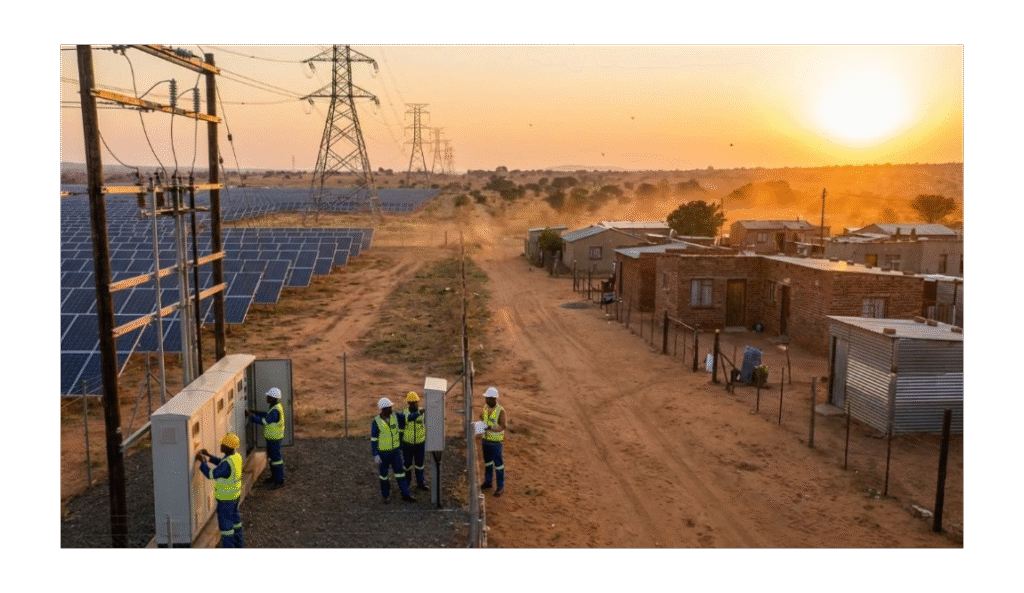
The IEA estimates that around USD 110 billion is set to be invested in energy across Africa in 2024. It also states that debt repayments and low sovereign ratings limit access to funds for capital-intensive clean energy projects. Source
The IEA also points to the scale of the access challenge: 600 million people without electricity and roughly 1 billion without clean cooking, and it emphasizes that concessional finance and de-risking are critical. Source
Purpose-Driven Solutions: A Way Forward for the Economy of Africa
Here are practical, ethical, and sustainable directions that match the realities described in the sources.
1) Lead with resilience, not only growth targets
Growth is important. But resilience decides whether progress survives shocks. UNCTAD frames resilience as the key difference between shock and impact. Source
Practical moves:
- diversify exports and partners
- strengthen risk tools for firms (currency, logistics, compliance)
- invest in climate adaptation where it protects food and jobs
2) Make “trade work” through infrastructure and simpler processes
UNCTAD emphasizes that high trade costs and missing infrastructure links limit regional value chains. Source
Practical moves:
- modernize border processes and digitalize documentation
- target “corridor” upgrades (ports–roads–rail–dry ports)
- build reliable power for industrial zones and SMEs
3) Scale energy access with honest financing plans
IEA highlights both the investment gap and the financing constraints from debt burdens and risk ratings. Source
Practical moves:
- blend concessional finance with private capital
- prioritize grid upgrades to unlock renewables
- design bankable access projects (mini-grids, clean cooking supply chains)
4) Back the platforms that already work for people
GSMA’s mobile money scale shows what happens when solutions fit daily reality. Source
Practical moves:
- support consumer protection and fair pricing
- connect mobile money to productive credit, not only payments
- use digital rails to support SMEs and tax systems more fairly
Mini Case Study (Experience-Driven): “Kijani Logistics” and the Economy of Africa
Imagine a mid-sized logistics company, “Kijani Logistics,” operating between a port city and inland manufacturing clusters.
The problem:
Costs are high. Border delays are unpredictable. Fuel and power issues disrupt schedules. Customers lose trust.
The “why” (purpose):
“We make trade predictable for African businesses, so they can grow with confidence.”
What they change (purpose-driven actions):
- They invest in digital tracking and simple customer updates.
- They build partnerships with mobile money providers for faster payments.
- They schedule around grid reliability and push for corridor-level coordination.
What improves:
Not perfection. But reliability. And in trade, reliability is value. This is how purpose turns into competitive advantage inside the economy of Africa.

Conclusion: The Economy of Africa Needs a Clear “Why” to Win the Next Decade
The economy of Africa is growing, but it is also negotiating tough constraints—debt costs, climate risks, energy gaps, and trade friction. The most practical path forward is purpose-driven: connect daily decisions to long-term outcomes that people can feel—jobs, reliable power, lower trade costs, stable prices, and fair opportunity.
When Africa’s leaders and builders align around that “why,” the continent does more than recover. It reinvents.
Editorial Note
This article reflects The Global Current’s commitment to providing empowering and actionable insights for personal and professional growth. The principles of purpose-driven leadership align with our core values of integrity, respect, and empowerment. We believe that by fostering a connection to a deeper purpose, leaders can unlock their full potential and inspire a new beginning for their teams and organizations.